Kung Fu for Self-Defense: What Works Under Stress
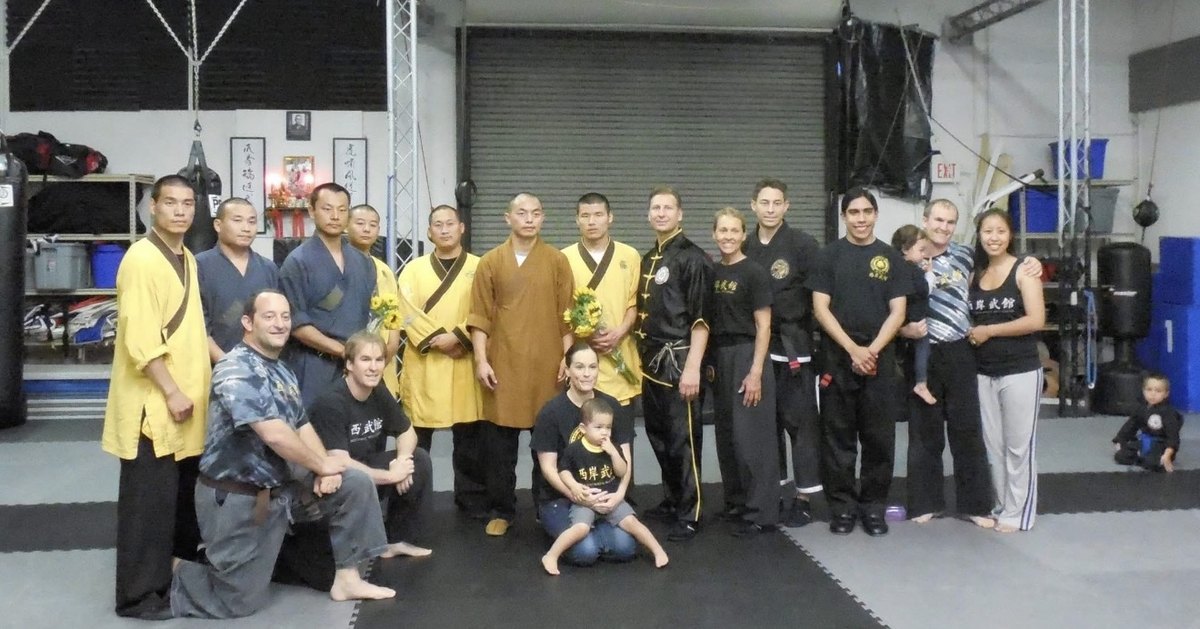
All right. Let’s talk Kung Fu for self-defense.
Back in 2013, I’d just had my first daughter. We were about five weeks in. Two months earlier, I’d tested for my black sash in Five Animal Kung Fu. It was a traditional martial art.
I then swiftly removed my kung fu program that we had originally paid 15 grand for and tried to combine it with my Kempo program, with no success. I still feel bad for the Penn family that was trying to get their black sash in kung fu. But when we sat down at the table together and I tried to explain to them that they needed to do something with some actual contact, and that I had no faith that they would apply any of their kung fu skills if something dangerous happened, they just saw me as a liar because, to them, I’d been teaching them kung fu. I took over the class for one of our instructors when he moved away to Louisiana.
Now, I want to say something clearly: I love the longevity benefits of kung fu for the body. Physically, it helps you with mobility and flexibility. Mentally, it helps you be present. And emotionally, if you’re physically moving and you can keep redirecting yourself back to your training, it will help you process your emotions more effectively.
For someone like me, who’s probably on the bipolar spectrum and has ADHD, nothing was more painful than kung fu training. There just wasn’t anything to keep my mind focused on the present moment. It probably helped me with my self-awareness, since I was essentially forced to meditate for an hour several times a week, doing kung fu forms and running a class.
But when it comes to something happening to you in a violent encounter, you’re never going to be able to utilize the techniques.
Here’s why. In kung fu, the forms are taught like a kung fu master walking through something, and you follow him from beginning to end, generally. It’s usually not taught in small pieces. (That’s not how I taught it. I always taught it broken down into pieces so that people could actually learn the forms, and they could at least look like what they were supposed to be doing.)
Secondly, you come up with the applications. So you come up with several different applications for the same movement. Hick’s law violation.
If I have 50 different ways to get out of a wrist grab, I’m not thinking about who I’m using this wrist grab against in which scenario. I’m just thinking about possibly the amount of violence and paralleling the danger. But to improve my mind speed, I can’t do that unless I account for all of the aspects of a scenario to pick the correct one. And if I don’t drill each one of those ones in each different scenario, all it’s going to do is slow me down.
It’s going to be like having a couple bunches of bananas and trying to pick out the best banana in the bunch that is not bruised. It’s always going to slow you down, and violence loves speed. So if I’m defending myself, I’m not gonna have time to slow down.
So, as I’m teaching these people kung fu, I know this inherently because I’ve done combat sports, and I’ve done self-defense, even against bullies, where I had plenty of time to know something bad was about to happen. And I still couldn’t use all of my skills the way I wanted.
But the Penn family was strictly trying to learn self-defense, and they had a romanticized idea about what self-defense was going to be like. I knew that it was going to look dirty and ugly, and they thought that they were going to be able to pull out their bong saos and lop saos and kam choys and do all this cool kung fu stuff. Training in these crazy stances that I knew they wouldn’t be able to utilize unless they had awareness, consent, and preparation from the other person at the time, and no one was going to be fighting to the death.
What good is self-defense if it doesn’t protect you when it is a life-or-death encounter?
I don’t want a knife that only cuts deep enough to kill a small child or a woman, but is never deep enough to stab the guy who’s 600 pounds, whose neck I can’t reach, and I can’t get through his fat. And he’s pinned me against the floor because I wasn’t paying attention because I have ADHD.
So, when it comes to kung fu, I’m not a big fan. I’m a big fan of training in systems that will help you be spontaneous, with gross motor skills that don’t take very long to do. That you learn to do extremely well. That’s a key component of the SPEAR System for self-defense.
Now, is there a kung fu master out there who can do stuff like this? Probably. But what can the average person do?
Why would I teach you something that only I could do? What kind of teacher is that?
A terrible coach will teach you what they like to do. A great coach will teach you what you can do. They also won’t make you try to conform to what they like to do unless they know what you’re doing is going to get you hurt.
So that’s why we don’t teach kung fu anymore.
We also don’t teach tai chi. For some reason, tai chi’s still listed on our Yelp page. I can’t figure out how to log into it to get it off.
Tai chi is taught incredibly slowly. Now, does it increase proprioception and interoception, like wrestling or Brazilian jiu-jitsu? Sure. If you ever drill something so slowly, can it have a benefit when you go faster? Sure, if you train it the right way. But you’d have to come to our school, and I’d have to show you in person for you to understand the difference.
When a stimulus is introduced too quickly, you will never be able to react fast enough to apply your training unless you have awareness, consent, and preparation beforehand. If someone bumps into me and I’ve already decided I’m fighting to the death, I could apply tai chi.
But what if I redirect someone who puts their hand on my shoulder in a violent encounter, and it’s a police officer, and my training has never practiced dealing with things morally, ethically, and legally? And I’m now beating someone to death, and I don’t hear the officer pulling me off of someone. And now I’m dealing with manslaughter, as opposed to being able to protect myself with my tai chi and my kung fu skills.
And I know these are extreme examples, but what are you people training for?
I’m not training to be able to fight someone on Friday night for fun. I’m training to survive when I’ve got my wife and four kids with me. And everyone needs to get home, no matter what happens to me. I have to be able to choose safety for them, and then myself. And if I’m just by myself, I have to be able to choose safety for me. And that includes against the criminal justice system.
Now, I’m fortunate. I’m a white man. The criminal justice system will probably be lenient with me compared to somebody else of a different demographic. And I know some of my SPEAR buddies might disagree with me on this, but they don’t have a master’s in social ecology, and they haven’t read peer-reviewed studies on both sides.
Yes, bias exists. Why don’t you admit that you may have bias yourself when it comes to politics and the criminal justice system because you were a cop? But that’s a story for another day.
My point is, it’s important to train in things that actually work. Don’t train in a system thinking that the more tools you have in your toolbox, the safer you are. Train in a system that teaches the difference between a combat sport and a violent encounter so that you don’t confuse the two.
And for God’s sake, don’t train in a traditional martial art thinking you’re going to apply those skills when you need to, when you have a very small timeline between stimulus and response. Because it will never happen unless you train it the right way.
Now, I know in the SPEAR System, Coach Blauer is a big proponent that SPEAR’s the bridge to your next move. Well, I’m not that guy. I’ve gone to Ancestry.com, and I have no athletic traits other than cardio, which is not gonna help me in a violent encounter. Everything else has been trained. Everything else I’ve developed is from good coaching.
I’m not going to teach a system that works for someone who’s even average. And when I look at every martial art, the only system I know that will make me safer, no matter what, is the SPEAR System.
I have no faith I will use a tan sau , a pak sau, a war palm, a trigger finger, a snake strike, a dragon fist. The only thing I love about kung fu is the tiger claw.
And if you watch traditional fu jow Pai, Black Tiger Claw, their first movement literally looks like flinching, low and high. One hand goes high, one hand goes low. Like they are literally being attacked by a giant person rushing into them like a tackle, and they’re going, “Oh, snaps,” and they’re protecting their head and their body. Someday maybe I can make my old Sifu safer when he shrinks his healthy ego a bit.
It literally looks like a flinch. And when you capture that energy, I think that’s great. And maybe I’ll go back and get my black sash in Fu Jow Pai, Black Tiger Claw, someday. But I sure as hell am not going to do it until I know that my system works for people who have no martial arts experience.
And not just for adults. I want this system to work for kids. And if the kids can understand the psychology—parents and adults all the time limit their kids and what they think they can understand, and don’t tell them things because of their own unconscious bias and fear.
Just like mental health issues that are generational, or you are afraid to tell your kid because you think that by telling them something about suicide, that’s going to trigger something for them. It’s your own fear. It’s your own unconscious bias.
When you start letting your kids rise up to the challenges of life, the way we know life is today, they will rise to meet those challenges. When you believe in them, they will rise up to meet those challenges. Kids aren’t softer, adults aren’t softer. It’s the same problem generation to generation. You don’t see the blind spots.
So that’s what I’m teaching kids at Blur Martial Arts. And it’s not going to be for everybody because not every parent is ready to let go of their own unconscious bias and fear surrounding their kids’ safety.
They’d much rather live in a vacuum and pretend that their kid learning kung fu is going to make them safer, when in reality, it’s protecting their cardiovascular system and perhaps a little bit of their mental health, but it’s not preventing them from getting raped, murdered, or killed in a violent encounter.
See What BMA Can Do For Your Child
First class is free. No pressure, no contracts — just come see for yourself.
Get Our Class Schedule